Saturday, June 25, 2011

Detour: Hopping Down Highway 89


If you travel the back road from Wickenberg to Prescott, up the Yarnell Hill, keep an eye out for this stone-faced amphibian -- a hop, skip and a jump past the small town of Congress. "Rocky" as he's affectionately called by the locals, has been perched atop a hill on the west side of Highway 89 since the 1920s, when a nearby homesteader grabbed her two sons and they applied a few buckets of bright green paint to the frog-shaped rock formation. Although the family has long since left the area, nearby townspeople maintain their lovable green mascot, much to the delight of travelers who continue to stop and pose for a photo with the enormous greenback -- including my Uncle Bill and I.

Saturday, May 14, 2011

Art or Fashion? You Decide.

I'll be honest. I don't have the greatest appreciation for art. Spending hours in a museum looking at wild contemporary creations or classic paintings by famous artists, like Vermeer or Monet, isn't my cup of tea. However, on my first trip to the Phoenix Art Museum, I discovered that art isn't limited to the traditional mediums of canvas or clay. Fashion, and the collection of Ann Bonfoey Taylor, has its place in the world of art.


Billed as Fashion Independent: The Original Style of Ann Bonfoy Taylor, the museum's featured exhibit was a stunning example of form meets function, with style and flair. Ann B. Taylor, who has no connection with the store that resembles her name, was not a famous fashion designer. Although she did for a short time design ski apparel, Ann was a unique American woman who had a passion for fashion, assembling her collection carefully. Whether dressed in day wear, evening wear or sportswear, Ann's wardrobe was both classic and sophisticated, but with a distinct style all her own. Ann's son donated his mother's extraordinary wardrobe to the Phoenix Art Museum, which will serve as the foundation of its fashion design collection.


Although I spent most of my time in Ann's "closet," I did venture into some of the museum's other galleries, including the Thorne Miniature Rooms, Latin American collection and the Modern & Contemporary exhibit. My favorite was the Western American collection, which had a section of works exhibiting the unique landscape, people and history of Arizona, including a painting by my favorite local artist Ed Mell. The museum also included a statue by realist artist Fredric Remington, but nothing from C.M. Russell, whose museum in Great Falls, Mont., I've had the pleasure of touring twice. Note to the Phoenix Art Museum: You should include the works of Charlie Russell.


While I may not be an art enthusiast, the Phoenix Art Museum was a great way to cool off in "style" on a hot Saturday afternoon in Phoenix.

Sunday, February 6, 2011

Hoopin' It Up at the Heard

Elementary school students throughout the Phoenix area take a field trip to the Heard Museum to learn about Native American arts and culture. I must have been absent that day.


The Heard Museum has been a landmark in Central Phoenix for more than 80 years. It's known worldwide for its extensive collections, changing exhibits and festivals celebrating the Native American people. The annual Hoop Dance Contest is among its most popular. Held every February, it is in its 21st year. Native American men and women from across the U.S. and Canada take part in the world championship competition.


If you are unfamiliar with the hoop dance, it incorporates speed and agility, as the dancers manipulate their bodies through one or more than 50 hoops. The most talented will incorporate creative designs and difficult maneuvers, as their feet keep time with the beat of the drum. It's an impressive and beautiful dance to see. Equally impressive are the colorful costumes the dancers wear. No two are alike.


Yet, the museum also offers something interesting to see. The Heard collects and exhibits centuries-old American Indian art, along with works from more contemporary Native American artists. Two stunning exhibits, only at the Heard for a limited time, were Preston Singletary's contemporary glass works and Jesse Monongye's amazing Navajo jewelry. Another powerful and ongoing exhibit is "Remembering Our Indian School Days: The Boarding School Experience," which examines the system of off-reservation Indian boarding schools and how the Native American children were removed from their homes and stripped of their culture, identity and language.


With more than 130,000 square feet of galleries, class rooms and performance area, you can easily spend an entire day at the Heard Museum. There is so much to do and see. Plan your lunch at its well-recommended Cafe, or if you are lucky -- like me -- you can enjoy Indian Fry Bread in the main courtyard.
Whether you are a tourist, new to the Valley or a long-time resident, you should take a trip to the Heard Museum. It's internationally renowned collection of Native American art and cultural pieces, along with its changing exhibits and full schedule of events will always offer something new to see. I'd better plan a another visit.


Sunday, January 23, 2011

Happy New Oil!

We've all heard about the health benefits of olive oil, which contains monounsaturated fat that can lower your risk for heart disease. I cook with olive oil almost every day, but not because its good for me, rather for the smooth grassy flavor it adds to my meal. Yet, I've never given much thought to how the lowly olive goes from the tree to the bottle, ultimately landing in my saute pan. That was until today, when I visited the Queen Creek Olive Mill.


Located at the base of the San Tan Mountains in the Southeast Valley, the Queen Creek Olive Mill is Arizona's only working olive farm, producing a unique assortment of hand-crafted oils and gourmet olive products. My cousin Jenni and good friend Lisa and I made the nearly 60-mile trek for its Festival of New Oil (Olio Nuovo), which occurs between January and February each year and celebrates the arrival of the "new oil" that was pressed last fall.


While to some, that may seem like a long way to go for olive oil, which you can buy at any neighborhood grocery store, the festival provides an opportunity to enjoy music, taste wine and other gourmet products, along with the mill's daily tours, well-stocked marketplace and Tuscan inspired del Piero cafe.


Our tour guide was an enthusiastic young man, who explained the entire olive making process, from tree to bottle. The Mill still harvests their olives the old-fashioned way, using a rake to remove them from the tree. What falls to the ground is gathered, cleaned of leaves and twigs, washed, then cold-pressed into a fine stream of liquid gold. A very find stream, I might add. A ton of olives may only yield 35 to 50 gal. of extra virgin olive oil.


The Mill's store features the fruits of all this labor. It's shelves are stocked with bottles of pure extra virgin olive oil, along with a host of fancy flavors, including Blood Orange, Chili and even Chocolate olive oil. However, my tastebuds prefer the more traditional flavors -- Roasted Garlic and Meyer Lemon, enjoyed simply with hot crusty bread and a robust glass of Chianti. Salute!


Saturday, November 13, 2010

Long and Wine-dy Road

I've learned a lot on these trips. For instance, on my trip to the Verde Valley wineries I learned about Kinetosis. It's a medical condition that many people suffer with it. Apparently, I'm one of them. Luckily, it's not serious. However, it's not curable either, but it can be prevented if you sit in the front seat of a moving vehicle. What is Kinetosis? Motion Sickness.


Sure, I know enough to stay off the Tea Cup ride at Disneyland, but a one hour ride in a luxury motor coach up Interstate 17 from Phoenix to the Verde Valley wineries should be a pleasant trip. Right? Wrong. I'll spare you the gory details, since I'm pretty sure you know where this is story is headed, except to say that by the time I arrived at the first stop, Oak Creek Vineyards Winery, the last thing I wanted in my stomach was wine.


Yet I am a trooper, so after regaining my composure I went into the tasting room to sample the wine. Oak Creek Vineyards Winery is located across from Oak Creek and has nearly 10 acres of grapes growing nearby. It's tasting room, aside from wine, offers a fine selection of gifts for the wine enthusiast, as well as items made by local artists. A whimsical print of a wide-eyed cat by Jacquie Shane, entitled "Cornelius and the Psychedelic Eclipse," caught my eye. He looked like I felt after the ride. I did manage to taste four wines. My pick: 2007, Syrah.


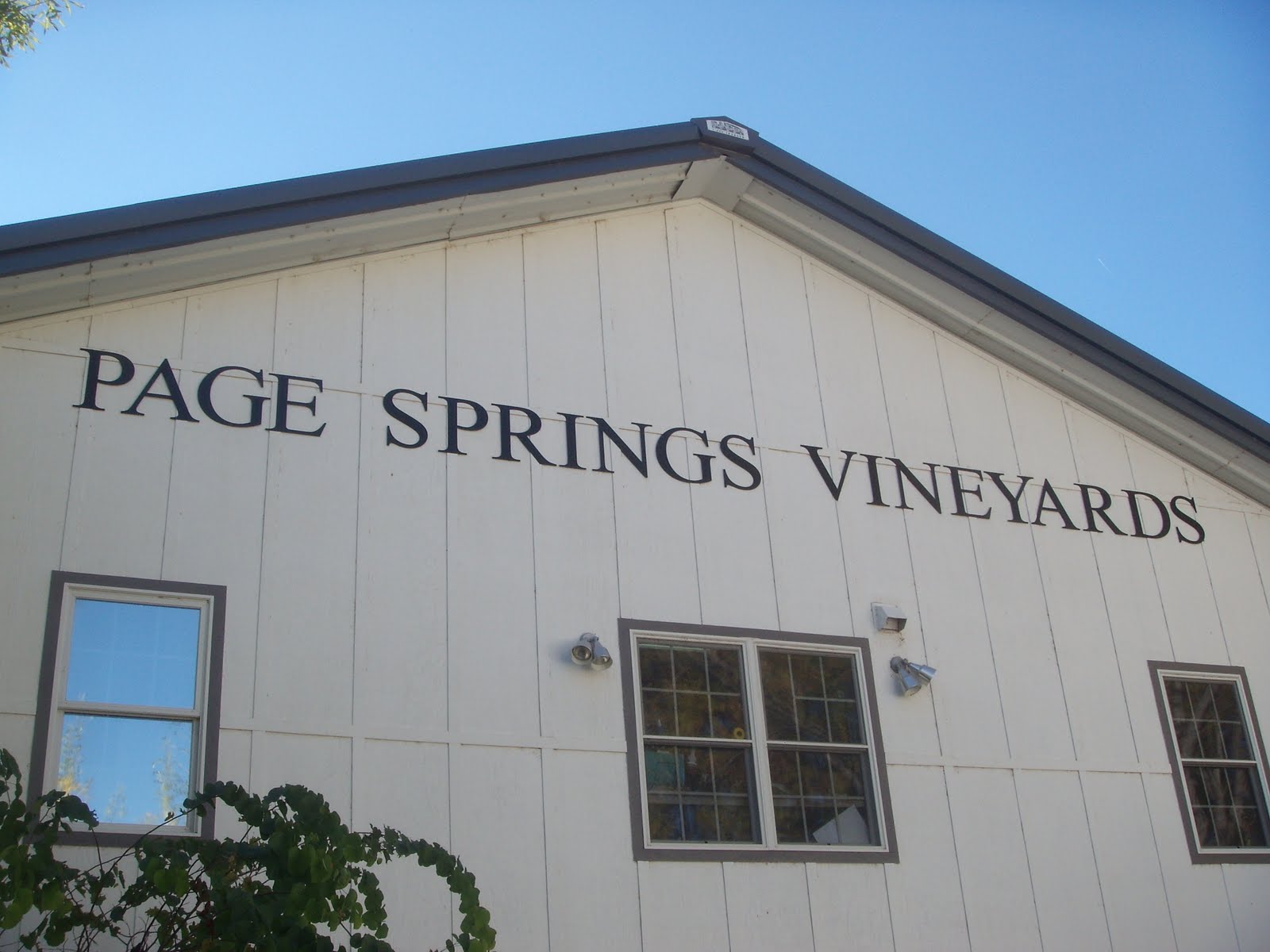
Luckily for me it was a short drive to the next winery, in fact it was across the street, Page Springs Cellars & Vineyards. This may be the most beautiful vineyard in the state. It's tasting room looks out over a field of grapes growing alongside Oak Creek. By the fall, the grapes are long gone and brittle, brown leaves adorn the plants.


The tasting was on a scenic picnic patio above Oak Creek and included a gourmet lunch buffet from Bertha's Cafe, one of my favorite lunch spots in Phoenix. Our hosts, Colleen and Greg from Arizona Grape Escapes, set out a full array of meats, cheeses, crusty french bread and accompaniments to pair with the wine. We enjoyed full bottles of Page Springs' white, rose and red wines. My pick: 2009 Vino de La Familia Blanca.


From the vineyards we traveled to the tasting rooms in the town of Cottonwood. The first stop was at Arizona Stronghold, which is co-owned by Maynard Keenan, the lead singer of the rock band Tool. Arizona Stronghold, unlike the previous two vineyards, grows its grapes in Southeastern Arizona, an area with rich farmland and a rich history. Cochise, the famous Apache Indian chief, led raids against Mexican and American settlements and military posts in the area until his surrender in 1872. Cochise was buried, not far from the vineyard, in the Dragoon Mountains, now called Cochise Stronghold. The exact location of his grave is unknown. Yet, Arizona Stronghold keeps his spirit alive, naming their wines after many of Cochise's family members and warriors. The tasting included five varietals. My pick: 2009 Tazi, a white wine named after Cochise's eldest son.


Across the street from Arizona Stronghold is the tasting room for Pillsbury Wine Company, which also grows its grapes in Southeastern Arizona. Led by Sam Pillsbury, a noted film director and former co-owner of Dos Cabezas winery, these wines are distinctly fragrant and full of flavor, and not surprising, the critics love them. In fact Wine Spectator calls Pillsbury's wines one of the "Rising Stars of the Southwest." After tasting five wines, I have to agree. My pick: 2009 Wild ChildRed.


After a long day of wine tasting, we boarded Arizona Grape Escapes' Winobago, for the drive back to Phoenix. Perhaps I was relaxed by the wine, but I enjoyed the return trip much better and suffered none my earlier ailments. If you're thinking about a trip to the Verde Valley wineries, this is the way to go -- just be sure to sit in the front of the bus.


Sunday, October 24, 2010

Ghost Busters

I stopped believing in ghosts after my mother died. Surely if they did exist, she would have come back from the grave and chased my father's new wife out of her house. Come to think of it, dad and Terry did move about a year after their wedding. I'm sure that was just a coincidence.


Well it's no coincidence that I'm in Jerome -- The Largest Ghost Town in America -- a week before Halloween. Perched precariously on top of Cleopatra Hill, Jerome was once a bustling copper mining town in Central Arizona, filled with a cast of characters straight from an old Western movie. Founded in 1876, a rough and rugged time in Arizona history, Jerome earned a reputation as the Wickedest Town in the West and quickly grew in population. It was once the fourth largest city in the Arizona Territory and by the 1920s had peaked in population at 15,000. However, four disastrous fires, the Depression of the 1930s and the fall of copper prices spelled the end for the boom town. Yet a few hardy souls -- both living and dead -- still remain to promote Jerome as a historic ghost town.


I arrived in Jerome with my friend Tory, looking to scare up some fun. After making our way through the windy streets to our hotel, we set off on our ghost hunt -- first stop, the Jerome Grand Hotel and its award-winning Asylum Restaurant.


The Jerome Grand Hotel could be a setting in a Stephen King novel. Sitting high on a hill looking down on Jerome, the stately Spanish Mission-style building was built in the 1920 as a hospital and asylum. A number of ghosts are said to haunt its floors, including the former caretaker who died mysteriously at the bottom of the elevator shaft. Lights flicker. Objects move. Strange and unpleasant smells fill the rooms. It can be an eerie place.

But not on this night. The only ghosts and ghouls that Tory and I encountered at the Jerome Grand were the hotel and restaurant staff, who were dressed in spooky costumes. In fact, the entire hotel is decked out for Halloween throughout the month of October. If you are brave enough to stay the night, reserve your room early and stop by the Asylum for a late night bite.


Our next stop was dinner at the Haunted Hamburger, where there's nothing scary about the food. It's burgers are juicy and come with a host of toppings --cheese, sauteed mushrooms, bacon, etc. -- on a toasted bun. Instead of a side of french fries, you can substitute a twiced baked potato, something won't find on the menu at Micky D's or other greasy-spoon restaurants. At the self-serve condiment bar you can pile on as many pickles, tomatoes and fresh veggies as you like, along with wide variety of sauces. If burgers aren't on your diet, the Haunted Hamburger has other menu items too, and a full-service bar with an array of cold beverages. But you should save room for dessert. Cakes, pies and other sweet treats are displayed prominently in a refrigerated glass case at the front door.

But what about the ghosts? Surely a place named the Haunted Hamburger must have a specter or two. According to our waitress it does, a small boy and a woman who are occasionally seen in the second floor kitchen. Loud sounds, like a mop bucket rolling across the floor, are also heard in the kitchen when no one is there. But not on this night --no spooky sights or scary sounds, other than a rumbling in our tummies.


The Spirit Room sits below The Connor Inn, where guests report sounds of women's voices laughing, someone coughing and objects moving when no one's around. But it doesn't seem that the ghostly guests ever make it downstairs for a nightcap, at least according to the bartender, who's never experienced so much as a bump in the night. However, Tory and I did come across something scary while sitting at the bar, a man dress as jolly old St. Nick -- in mid-October. If you've ever seen Billy Bob Thornton in the movie Bad Santa you'll know what I mean.


Paul & Jerry's Saloon is just a few doors down from the Spirit Room, and our last stop of the night. Dimly lit with cafe tables and a long wooden bar, it looks like an old fashioned ice cream parlor straight from a Tim Burton Halloween tale. But no one goes to Paul & Jerry's expecting a hot fudge sundae, what you'll find are pool tables, whiskey and beer.

The bartender, who had been working there for several years, told us that the only spirits we would find at Paul & Jerry's are behind the bar, which was true. But he did tell us about a waitress who refused to close the bar late at night, reporting spooky sounds when she was the only soul in the building, or so she thought.


Our last hope of spotting a spirit was at the Mile High Grill and Inn where we spent the night. The building, once a bordello, is said to be haunted by Jennie Banters, the madame, two male ghosts and Jennie's cat. With my propensity to attract felines, I was sure that I would find a phantom pussycat curled up on my pillow, but I did not. The scaredy cat, and the other spirits, never made an appearance.


Although Tory and I struck-out on our ghost hunt, we met some spirited souls in Jerome. By day you'll meet artists, musicians, bikers, inn keepers, waiters and every kind of merchant imaginable. But if you are brave enough to stay the night, you just might encounter a soul of another kind.

Saturday, October 23, 2010

Ales and Rails

I love Autumn -- its harvest festivals and foliage in hues of red and gold. In Arizona, a great place to enjoy both is the Verde Valley Canyon Road, which celebrates the fall season with its Ales on Rails Oktoberfest.


My friend Tory and I hit the road and headed north to beat the heat in Phoenix. While the calendar says its fall, the thermometer does not agree -- still recording temps in the 90s. In the Verde Valley, however, fall has arrived. A short 2-hour drive up Interstate 17 and the temperature dropped 20 degrees. A welcome relief.


We arrived at the station early to enjoy the Oktober-festivities before our train ride. All the Deutschland favorites were well-represented. Loud German music was playing in the courtyard and we feasted on brats, sauerkraut, potato salad and beer -- plenty of beer, 12 different kinds. There were local brews from Oak Creek Brewing Company, German brands, like Spaten, and many others from around the U.S. -- New Belgian from Ft. Collins, Colo., Big Sky from Missoula, Mont. and Sam Adams from Boston, Mass., to name a few.


Tory and I each received five tastes, which was more than enough, along with our commemorative Verde Canyon Railroad beer glass. While several of my favorites beers were among the mix, I tried some new ones. The most unusual and most surprising was Alien Amber Ale from Roswell, N.M. I initially thought it was a novelty brew and would taste horrible, but if fact it was quite good. But my favorite overall was New Belgian's Hoptober Golden Ale with its creamy, medium-bodied flavor, similar to brewery's famous Fat Tire label.


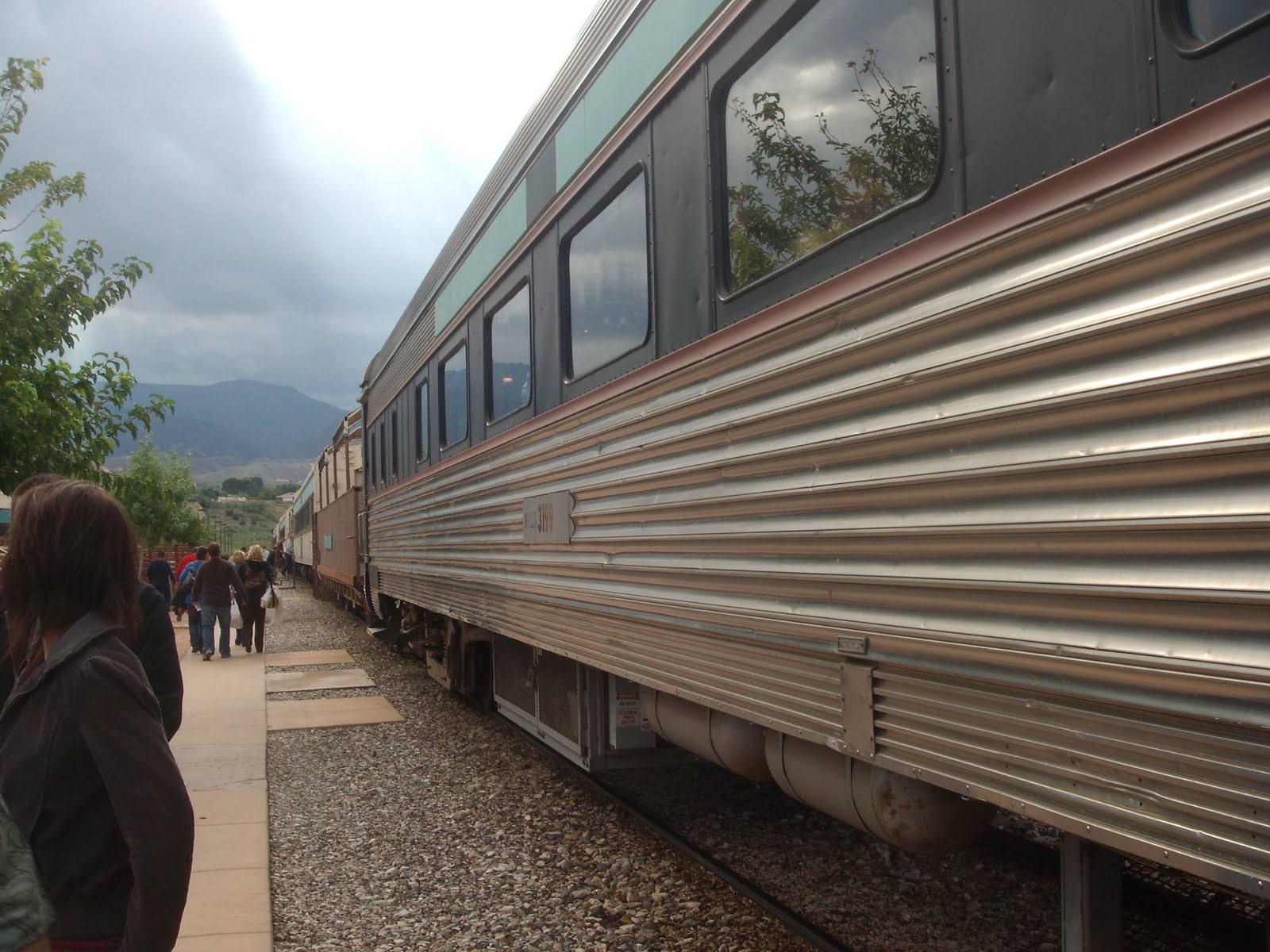
After tasting a few more beers, it was time for Tory and I to board the train. We were in the first class cabin, which in my opinion is the only way to go. There you enjoy a Champagne toast upon boarding and spacious accommodations, including big, comfortable seats, a complementary snack buffet and an attentive staff that is more than happy to point out the sights along the way.


There is no shortage of breathtaking scenery along the 40-mile round trip wilderness ride from the Clarkdale station to the Perkinsville Junction. The train snaked along the Verde River and through the Verde Canyon, which is mostly inaccessible except by foot, kayak or a four-wheel drive vehicle. Whether inside the comfortable rail car or outside on the open-air gondola, we got a spectacular view of nature. Gold, bronze and copper leaves waved as the train passed by, eagles soared high above the canyon wall and exquisite rock formations towered over the tracks


At Perkinsville -- although there is still another 18 miles of track ahead -- the train comes to a stop and the engine slides along the right-hand side and hooks up with the other end of the train for the ride back to Clarkdale. The return trip provides the same sights and a chance to spot anything you missed on the first half of the journey.


They say no matter how many times you travel the Verde Canyon Railroad, no two trips are alike. I think that's true. The canyon's hidden wonders and the changing seasons will make every trip exciting and new.

Sunday, September 19, 2010

Joining the Masses at Mass

Thousands of people visit Mission San Xavier del Bac each year and marvel at its Spanish Colonial architecture, centuries old murals and statues, and historical significance in shaping the development of the Southwest. There is, however, another group of visitors who make a pilgrimage to the "White Dove of the Desert" each week to attend Mass. The Mission is more than a national historic landmark. It's a church with a congregation that celebrates its faith each week much in the same way it has for more than 200 years.


Located 10 miles southwest of Tucson on the Tohono O'odham reservation, Mission San Xavier del Bac is the northern most of the Spanish missions established by Padre Kino in 1692. The church you see today is not the original house of worship built by the famous Jesuit missionary and explorer. His was a simple adobe chapel. Work on the Mission church began in 1783 and was completed in 1797.


Other than its brightly painted walls and ceiling, the inside of the church remains modest. There is no heat or air conditioning to provide a comfortable climate-controlled environment in which to pray. God controls the temperature with the weather. There is no electricity either, other than what is connected by extension cords to a few spotlights and oscillating fans. The pews are hard wooden benches designed to keep you alert and awake during Mass. You won't find padded kneelers either. You kneel on the hard concrete floor. It's amazing that the religious followers of Padre Kino were able to convert anyone to Christianity in such an uncomfortable environment.


But religion isn't about the bricks and sticks that make up the church, its in the soul of each parishioner. You can see it in their celebration of Mass and you can hear it in the voices of the choir. An unamplified group of six with two acoustic guitars, there voices echoed in perfect harmony through the rafters of the church and up to heaven.


Whether you are Catholic, or not, celebrating Mass at Mission San Xavier del Bac is a unique experience and should be on your to do list.


Note: You won't find the Rosary Guild selling donuts and other baked goods after Mass at Mission San Xavier del Bac. Instead you'll find members of the Tohono O'odham community in front of the church selling fresh-made Indian Fry Bread. Choose from sweet varieties topped with cinnamon or powdered sugar, or try a meal-size taco topped with beans, red or green shredded beef, cheese, lettuce and tomatoes. Thank God for fried food. Yum!


Saturday, September 18, 2010

No Whining About Southern Arizona Wine

If you're a wine snob, and I know there are a few of you out there, the thought of a decent bottle of wine coming from Arizona is absurd. However, after tasting a few of our state's best Blancs and Cabernets, I can tell you that they are wrong. Arizona has a burgeoning wine industry with a number of vineyards producing some fine varietals.


So the story goes, a professor at the University of Arizona was hired to study the environment in the Sonoita-Elgin area. He found that the climate and terroir (that's a fancy French word for dirt) was similar to some of the wine making regions in Europe. With that, the seeds were planted -- literally and figuratively -- and the wine business began to grow in Southern Arizona. Today there are 10 wineries in and around Sonoita and Elgin. I visited six of them.


My first stop was the Dos Cabezas WineWorks, which may be one of the most well known wineries in Arizona. Its primary operation is east of Wilcox, but has a cozy tasting room in the town of Sonoita and a small vineyard nearby. At the tasting room I bellied up to the bar and was presented with a wide variety of reds and whites, among them several award winning wines. I won't bore you with tasting notes -- "aromas of blackberry, earth and oak spice with a long chewy finish, blah, blah, blah" -- I don't have any. My motto: if you like the wine drink it. At Dos Cabezas, I liked every one but was able to narrow my selection and chose a few fine souvenirs. The score: Tasted nine wines and purchased two.


Just off a dirt road, tucked behind rows of grapes, is the Wilhelm Family Vineyards. It's tasting room is much different than Dos Cabesas'. It's more like your neighbor's kitchen. I was first greeted by a fluffy orange cat napping at the front door, then by a lively group of people seated around a kitchen counter, eating popcorn and drinking wine. The hostess of this party was the winemaker herself, Karyl Wilhelm. It's a casual environment that may not appeal to fine wine connoisseur, but is perfect for neauveau winos. The wines are also quite unique, with a few special dessert wines with hints of fruit, coffee and chocolate. If you buy a bottle, Karyl will even autograph it for you. The score: Tasted five wines and purchased two.


Along the Elgin Road is Callaghan Vineyards, where you will find Kent Callaghan pouring wine at the vineyard his parents started in the early 1990s. With nearly 20 years of practice, I can assure you he knows his stuff and makes some tasty wine. Callaghan's had a great selection of reds, mostly blends, which are among my favorites. Why enjoy one grape when you can enjoy three or four in perfect harmony? But don't discount their whites. Ann's, a blend of Grenache Blanc, Verdelho and Symphony grapes was among my favorites, with its fruit flavor and aroma and limited oak influence. The score: Tasted nine wines and purchased three.


Next door to Callaghan's is Canelo Hills Vineyard & Winery. Joan and Tim, and one of the Canelo Hills dogs, were greeting visitors and pouring wine. Joan stays at the vineyard, while Tim is only there on weekends. Monday through Friday he's a full-time psychiatrist in Tucson, which may explain his weekend passion for making wine. The atmosphere in their tasting room is quiet and relaxed, allowing you to savor your glass and enjoy each taste. Canelo Hills offered a Riesling that was dry, when compared to the traditional sweet wines of Germany, and more suited to my taste. The score: Tasted five wines and purchased one.


Sonoita Vineyards came recommended to me by a guest at my hotel. Located on rolling, grass covered hills, you can almost imaging the Caballeros who rode through these fields a century ago. Today they would be surprised to find rows of grapes where their cattle once grazed, along with a large tasting room, gift shop and winery, producing premium wines of all varieties. For my taste, I found most were sweet rather than dry, but all were quite good. The gift shop is also a great place to find wine accessories, apparel and unique souvenirs. The score: Tasted nine wines and purchased one.


Last, but not least, I stopped at Lightening Ridge Cellars, a Tuscan-themed winery. One of the newer wineries in the area, it's old world style is being well received. When I arrived the tasting room was packed. It was hard to find a spot at the bar. Once I did, I was pleased to find full-flavored wines made from classical Italian grapes. The Montepuciano was my favorite. All that was lacking was a big bowl of Pasta Bolognese to enjoy it with. The score: Tasted five wines and purchased one.

To wine snobs everywhere, you can have Napa and Sonoma and the wine producing regions of France. I'll take a glass of Arizona wine, anytime. Next time you should give it a try, too.